
Healing for Betrayal Trauma Victims: What Matters Most
Apr 15, 2026You Found Out. And Everything Fell Apart.
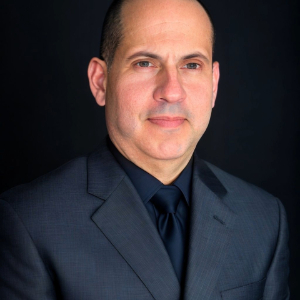
Joshua Lewis, CRSS
Maybe you found something on his phone. Maybe he confessed. Maybe you'd suspected for years and now you finally know.
However it happened — you know now. And knowing has broken something open that you didn't know could break.
If you can barely read right now. If your hands are shaking. If you keep reading the same sentence over and over and nothing is going in — that is okay. That is your body doing exactly what bodies do when something this big happens.
You don't have to absorb everything right now. Read what you can. Come back to the rest later. This will still be here.
First. The most important thing.
What you are feeling is not crazy.
The rage. The obsessive checking. The need to know every single detail. The inability to eat or sleep. The swings between wanting to hold him and wanting to burn everything down. The feeling that the floor has dropped out from under you.
All of it makes sense.
You did not cause this. This is not about you not being enough. What he did belongs to him — to his wounds, his history, his patterns. Not to you.
Three Things The Field Has Learned
Therapists and researchers have spent decades trying to understand what happens to partners when they discover this — and what actually helps.
1. The First Idea: You Have Your Own Disease
This was the first thing the field came up with. It said: partners are co-addicts.
This idea caused harm. It was wrong.
You are not sick. You did not contribute to this.
What it got right: your healing still matters.
2. The Second Idea: You Are A Trauma Survivor
This is the dominant framework today.
Your hypervigilance, intrusive thoughts, and emotional swings are trauma responses.
This idea gets something essential right: you have been genuinely hurt.
Research also shows something important: the strongest predictor of impact is often prior trauma.
That does not mean you caused this. It means your healing may eventually include tending to what came before.
3. The Third Idea: You Are Someone Who Loves
This is the newest framework.
Your attachment, your monitoring, your need to understand — these come from love, not pathology.
You are not just a victim. You are a human being with agency and depth.
What They All Miss
Addiction is, at its core, an attachment wound.
The part of him that acted out is the part that could not tolerate real intimacy.
That part was formed long before you.
Your healing changes the relational field — not because you fix him, but because nervous systems affect each other.
Your healing matters. Fully. Independently. And it also ripples outward.
If You Can Only Do One Thing Right Now
Find a therapist trained in betrayal trauma.
Not general therapy. Not couples therapy.
Someone who specializes in what you are going through.
What Helps — When You Are Ready
- Your own therapist (specialized in betrayal trauma)
- Community (S-Anon, COSA, support groups)
- Your own timeline (independent of his recovery)
- Whole-person healing (body, sleep, meaning, sexuality)
- Eventually: addressing earlier wounds
One More Thing
If you have children, your healing matters deeply for them.
Children organize around their parents' nervous systems.
Your healing creates a different emotional environment for them.
You Are Going To Get Through This
Not today necessarily.
But you are.
One step. One day. One breath at a time.
Support Resources
- APSATS clinician directory: apsats.org
- S-Anon: sanon.org
- COSA: cosa-recovery.org
- Betrayal Trauma Recovery: btr.org
References
Bowlby (1988); Carnes (1991); Humphreys et al. (1997); Johnson (2002); Schore (2003); Steffens & Rennie (2006); Weiss (2018)
Don't miss a beat!
New moves, motivation, and classes delivered to your inbox.
We hate SPAM. We will never sell your information, for any reason.
Author